


Specialist care for what comes before. And what comes after.
Cancer doesn’t begin at diagnosis. Care shouldn’t either.
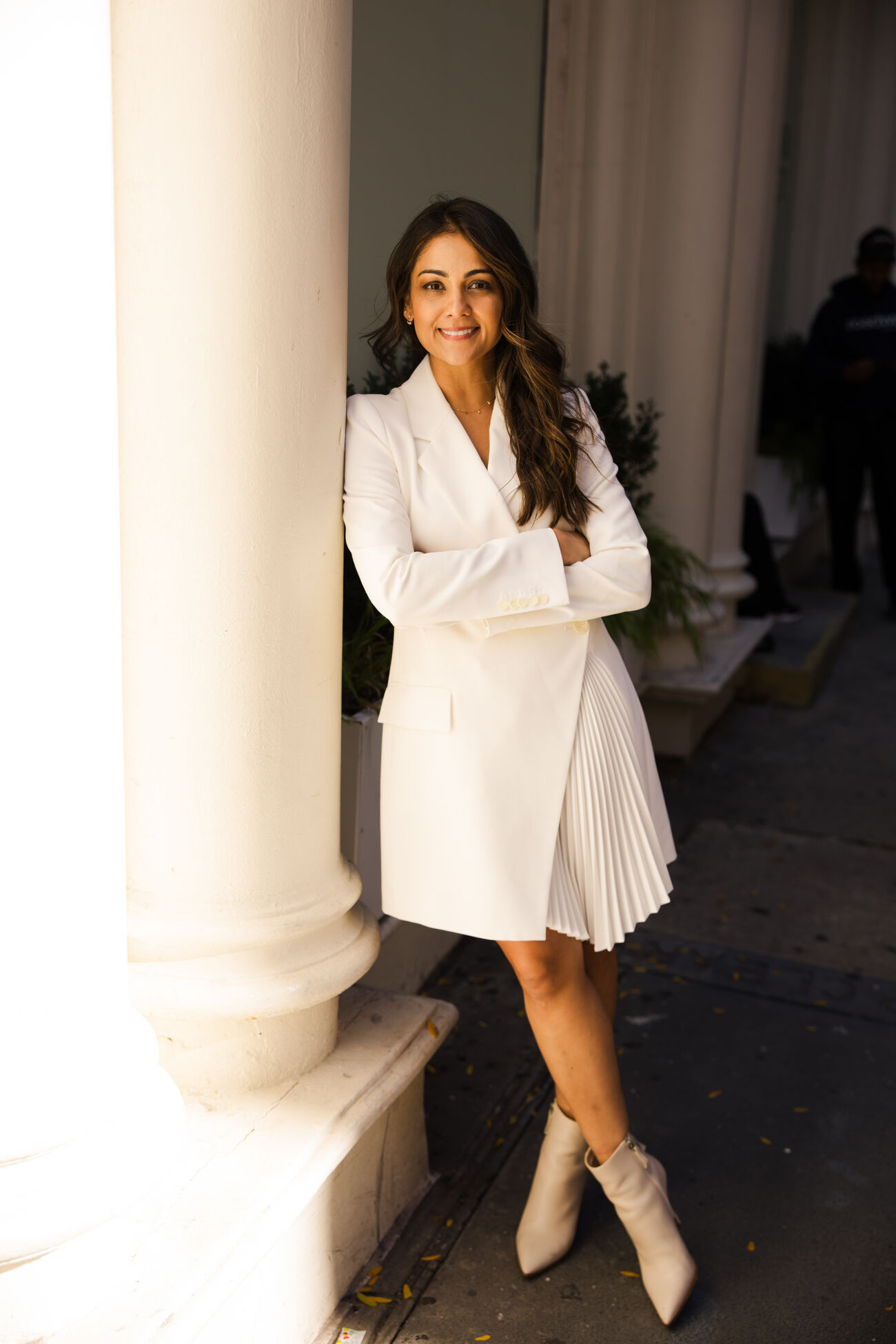
I am Dr. Arisha Patel, a triple board-certified Oncologist, Hematologist, and Internist. I am building the precision model for proactive cancer care, from rising risk through long-term survivorship.
Published and presented: The Lancet Oncology · Cancer Discovery · JCO Clinical Cancer Informatics · British Journal of Haematology · Cancer · ASCO · AACR · ASH
We know how to treat what we can see. The next challenge is seeing sooner.
Cancer risk develops over time.
But the clues are often scattered across family history, genetics, laboratory results, imaging, and years of medical records.
The evidence is not subtle. Roughly four in ten cancers are linked to modifiable risk factors. Five to ten percent are driven by inherited mutations we can test for today. And when cancer is found early, survival across the most common cancers is several times higher than when it is found late.
The information already exists. The work is in reading it in time.
The next breakthrough is time
Predictive cancer care brings medical information together across time, so disease is understood well before it declares itself and physicians can act with more context. The tools to read change across time finally exist. The system built to use them is what I am building.
Precision oncology for the years before a diagnosis and the decades after treatment.
Signals accumulate
over time
I was in the rooms most of medicine never sees together.
The clinic, as a triple board-certified Oncologist, Hematologist, and Internist. I sat with patients and their families through the most vulnerable conversations in medicine, and I know exactly which questions the system was never designed to answer.
The research lab, as an NIH T32-funded physician-scientist, where I built machine learning models to predict outcomes in sickle cell disease, one of the first physician-led applications of ML in clinical outcomes research.
The drug industry, as Senior Medical Director of Personalized Healthcare at Genentech, where I carried that ML fluency into precision oncology drug development and our tumor-agnostic basket trial work supported NCCN Category 2A guideline recommendations, opening evidence-based access to targeted therapy for patients whose cancers fall outside traditional approval pathways.
The academic center, as Adjunct Clinical Instructor in Oncology and Hematology at Stanford, practicing as a breast oncologist.
Those rooms rarely speak to each other. Each holds one piece of the problem. The clinic sees the patient in front of it. The lab sees the data. Industry sees the pipeline. Academia sees the evidence. No one sits in all of them.
Seeing the problem whole was one thing. Building the answer took one more room: Carnegie Mellon, where I worked alongside some of the best minds in AI and machine learning while earning my MBA in Biomedical Entrepreneurship, the foundation to build where clinical medicine, AI, and healthcare systems meet.
I saw the full arc. And the full arc shows what no single room can: cancer is not an event. It is a process that begins years before diagnosis and continues for decades after treatment.
Cancer is not an event.
Every oncologist works the middle. I built my practice for the edges.
3 Board certifications
Internal Medicine, Medical Oncology, and Hematology (ABIM)
- NIH T32-funded physician-scientist
- Genentech Former Senior Medical Director
- Stanford Former Adjunct Clinical Instructor, Oncology and Hematology
I was in the rooms most of medicine never sees together.
One future.
Two paths to bring it closer.
Oncology built its tools for the treatment window. I built mine for the years before and the decades after. BioNurture and BioSynova are the systems built by a physician who saw the full arc of cancer care, identified the gap, and is closing it.

BioNurture
The care model
A physician-led oncology and hematology practice for people navigating elevated cancer risk, survivorship, and complex blood-health.
Visit BioNurture
The Cancer
Resilience Code
Essays and a forthcoming podcast on what it takes to build predictive cancer care: clinical judgment, AI in medicine, survivorship, and the decisions that will define the next decade of oncology.
Subscribe and start with the founding essay, Cancer Is Not an Event.